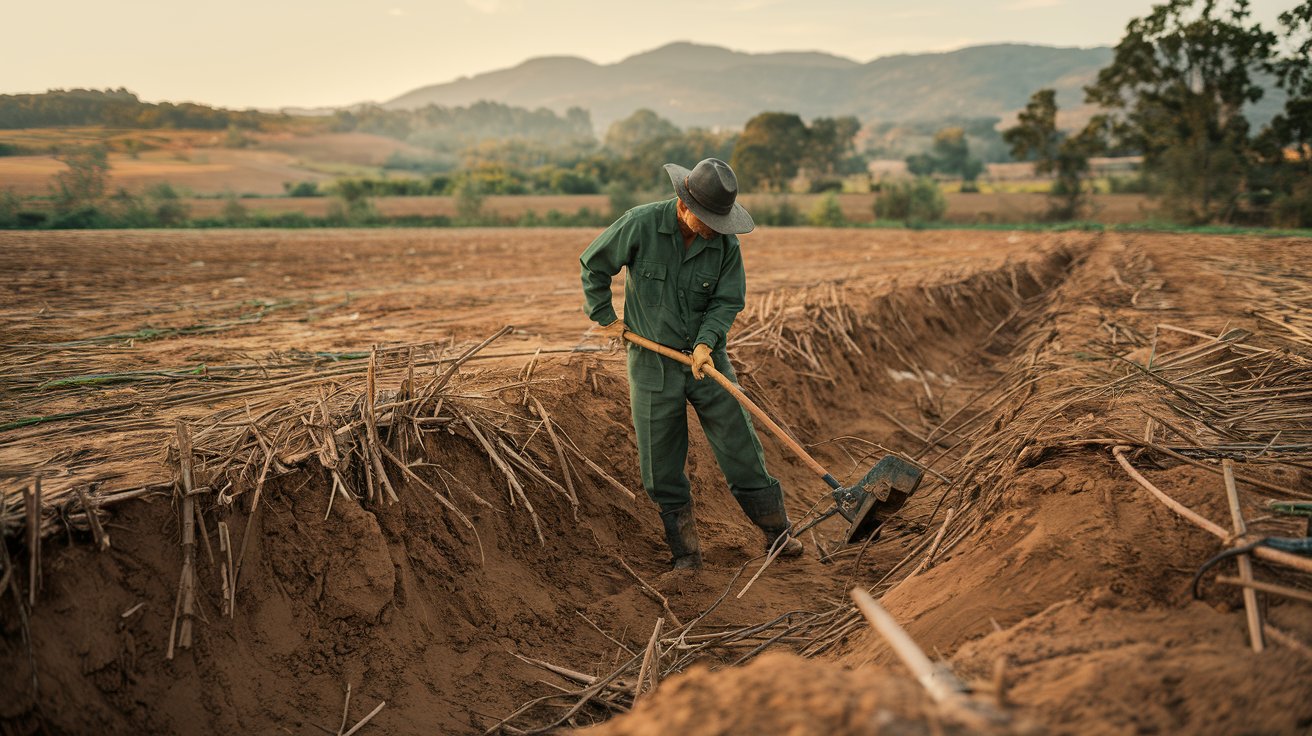
What is a Soil Conservationist? Career Guide 2025
A soil conservationist is an environmental professional who develops and implements strategies to prevent soil erosion, improve land management practices, and promote sustainable agricultural techniques. These specialists work with farmers, landowners, and government agencies to protect soil resources and maintain ecosystem health across the United States.
Primary Responsibilities of a Soil Conservationist
Soil conservationists perform diverse duties that directly impact environmental sustainability and agricultural productivity. They conduct comprehensive soil surveys to assess land conditions, analyze erosion patterns, and identify areas requiring immediate conservation intervention. These professionals develop detailed conservation plans tailored to specific geographic regions and farming operations.
Their work involves extensive field assessment where they examine soil composition, test pH levels, measure organic matter content, and evaluate water infiltration rates. Soil conservationists also monitor the effectiveness of implemented conservation practices through regular site visits and data collection. They collaborate closely with agricultural producers to ensure conservation methods align with farming objectives while maintaining profitability.
Conservation Planning and Implementation
Developing comprehensive conservation plans represents a core responsibility for soil conservationists. They create detailed strategies that address specific land management challenges, incorporating techniques such as contour farming, terracing, cover cropping, and buffer strips. These plans must consider factors including topography, soil type, climate conditions, and existing agricultural practices to ensure successful implementation.
Technical Assistance and Education
Soil conservationists provide crucial technical assistance to farmers and landowners, explaining complex conservation concepts in accessible terms. They conduct workshops, seminars, and field demonstrations to showcase effective soil management techniques. This educational component helps build community awareness about sustainable land use practices and encourages voluntary adoption of conservation measures.
Educational Requirements and Career Path
Becoming a soil conservationist typically requires a bachelor’s degree in soil science, agronomy, environmental science, or a related field. Most positions prefer candidates with coursework in soil chemistry, plant science, hydrology, and conservation principles. The Natural Resources Conservation Service (NRCS) and other federal agencies often require specific academic qualifications for entry-level positions.
Many soil conservationists pursue advanced degrees to enhance their expertise and career prospects. A master’s degree in soil science or environmental management can lead to specialized roles in research, policy development, or senior management positions. Professional certification through organizations like the Soil and Water Conservation Society adds credibility and demonstrates commitment to the field.
Essential Skills and Competencies
Successful soil conservationists possess strong analytical skills to interpret soil test results, assess land conditions, and develop effective conservation strategies. They need excellent communication abilities to work effectively with diverse stakeholders including farmers, government officials, and environmental groups. Technical proficiency in Geographic Information Systems (GIS), soil sampling equipment, and data analysis software is increasingly important.
Professional Development Opportunities
The field offers numerous professional development pathways through continuing education courses, specialized training programs, and industry conferences. Soil conservationists can advance to supervisory roles, become district conservationists, or specialize in areas such as watershed management, urban soil conservation, or agricultural policy development.
Work Environment and Employment Settings
Soil conservationists work in varied environments, spending significant time outdoors conducting field assessments and meeting with landowners. Office work involves data analysis, report writing, conservation plan development, and administrative duties. The position requires physical stamina for walking across agricultural fields, collecting soil samples, and operating field equipment in various weather conditions.
Employment opportunities exist across multiple sectors including federal agencies like NRCS and Environmental Protection Agency, state conservation departments, private consulting firms, and non-profit environmental organizations. Government positions often provide stable employment with comprehensive benefits, while private sector roles may offer higher salaries and greater project diversity.
Salary Expectations and Job Outlook
According to the Bureau of Labor Statistics, soil conservationists earned a median annual salary of $65,290 in 2024, with experienced professionals earning upward of $85,000 annually. Federal government positions typically offer competitive salaries starting around $45,000 for entry-level roles, with advancement potential to GS-12 and GS-13 levels earning $70,000 to $95,000 per year.
The job outlook remains positive with projected employment growth of 6% from 2024 to 2034, driven by increasing awareness of environmental issues and the need for sustainable agricultural practices. Climate change concerns and federal funding for conservation programs continue to create new opportunities in this field.
Regional Salary Variations
Salaries vary significantly by geographic region, with higher compensation typically found in states with intensive agricultural activity such as California, Iowa, and Texas. Urban areas and regions with significant environmental challenges often offer premium salaries to attract qualified soil conservation professionals.
Benefits and Job Security
Government positions provide excellent job security along with comprehensive health insurance, retirement benefits, and paid time off. Many soil conservationists enjoy flexible work schedules and the satisfaction of contributing to environmental protection and sustainable agriculture practices.
Conservation Technologies and Modern Practices
Modern soil conservationists utilize advanced technology tools including precision agriculture equipment, satellite imagery analysis, and drone surveys to assess land conditions and monitor conservation project effectiveness. GPS technology enables accurate field mapping and soil sampling, while computer modeling software helps predict erosion patterns and evaluate conservation practice outcomes.
Emerging technologies such as remote sensing and artificial intelligence are revolutionizing soil conservation practices, allowing professionals to analyze large-scale land use patterns and identify conservation priorities more efficiently. These technological advances require ongoing training and adaptation to remain current with industry standards.
Environmental Impact and Sustainability Goals
Soil conservationists play a critical role in addressing climate change through carbon sequestration projects and sustainable land management practices. Their work directly contributes to reducing greenhouse gas emissions, improving water quality, and protecting biodiversity. Conservation practices implemented by these professionals help maintain soil fertility for future generations while supporting current agricultural productivity.
The profession aligns with national sustainability objectives outlined in the 2018 Farm Bill and various environmental protection initiatives. Soil conservationists contribute to achieving conservation compliance requirements and environmental quality incentive programs that benefit both farmers and the broader ecosystem.
Career Challenges and Rewards
Soil conservationists face unique challenges including budget constraints for conservation programs, resistance from landowners unfamiliar with conservation benefits, and the need to balance economic interests with environmental protection goals. Weather-dependent fieldwork can be physically demanding and may require irregular schedules during peak agricultural seasons.
Despite challenges, the profession offers significant personal satisfaction through meaningful environmental work and positive community impact. Many soil conservationists find fulfillment in educating others about sustainable practices and witnessing the long-term benefits of their conservation efforts on local ecosystems and agricultural productivity.
Related video about what is a soil conservationist
This video complements the article information with a practical visual demonstration.
FAQ – Common Questions
How long does it take to become a soil conservationist?
Becoming a soil conservationist typically requires 4-6 years including a bachelor’s degree in soil science, environmental science, or related field. Entry-level positions may require additional on-the-job training lasting 6-12 months to learn specific conservation techniques and local regulations.
What is the difference between a soil conservationist and an environmental scientist?
Soil conservationists specialize specifically in soil protection and agricultural land management, while environmental scientists work across broader environmental issues. Soil conservationists focus primarily on erosion control, sustainable farming practices, and soil health improvement rather than general environmental research or pollution control.
Do soil conservationists work year-round or seasonally?
Soil conservationists work year-round with seasonal variations in activities. Spring and summer involve intensive fieldwork including soil testing and conservation plan implementation. Fall and winter focus more on planning, data analysis, report writing, and educational program development.
What states have the highest demand for soil conservationists?
States with extensive agricultural operations such as Iowa, Illinois, Texas, California, and Nebraska have the highest demand for soil conservationists. These regions require significant conservation efforts to maintain soil health and prevent erosion on millions of acres of farmland.
Can soil conservationists work remotely or do they need to be in the field?
Soil conservationists must spend significant time in the field conducting site assessments and meeting with landowners. However, portions of their work including data analysis, report writing, and conservation planning can be completed remotely, especially with modern technology tools.
What advancement opportunities exist for soil conservationists?
Advancement opportunities include becoming district conservationists, area conservationists, or state conservation specialists. With additional education and experience, professionals can move into policy development, research positions, or private consulting roles with higher earning potential.
| Career Aspect | Key Details | Professional Benefit |
|---|---|---|
| Education Requirements | Bachelor’s degree in soil science or related field | Strong scientific foundation for career success |
| Median Salary | $65,290 annually with growth potential | Competitive compensation with stability |
| Work Environment | Combination of fieldwork and office duties | Varied daily activities and outdoor experience |
| Job Growth | 6% projected growth through 2034 | Positive outlook with increasing demand |
| Environmental Impact | Direct contribution to sustainability goals | Meaningful work protecting natural resources |